
What Is a Session Border Controller? How It Works
As businesses adopt IP telephony, securing voice traffic becomes increasingly important. Understanding what is a Session Border Controller helps explain how enterprises protect and manage VoIP communications. In this article, Axclusive ISP explores how SBCs support secure and reliable voice networks.
What is a Session Border Controller?
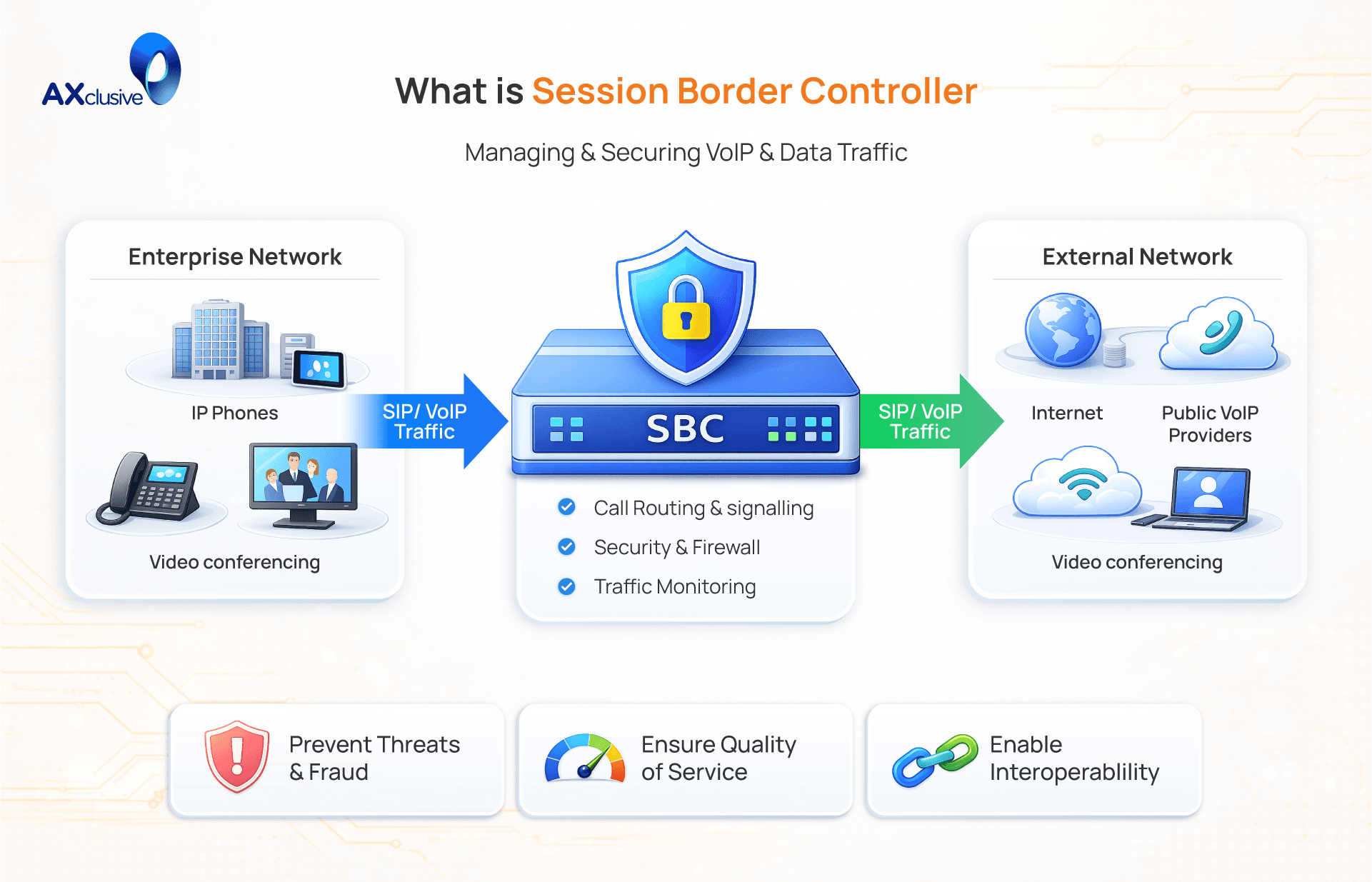
A Session Border Controller (SBC) is a critical network security and management element deployed at the enterprise perimeter to govern, secure, and route IP-based communication traffic. Functioning essentially as a specialized firewall for real-time media, an SBC dictates how data sessions are initiated, conducted, and terminated across network boundaries.
While historically developed with the primary purpose of safeguarding Voice over IP (VoIP) infrastructures, the role of the SBC has expanded significantly alongside modern telecommunications. In today's Unified Communications (UC) environments, SBCs act as comprehensive gatekeepers that ensure the security, interoperability, and quality of service (QoS) for all forms of real-time collaboration. This includes actively managing IP video streams, instant messaging, web conferencing, and complex enterprise collaboration sessions.
How Session Border Controllers Work
At their core, SBCs operate by inserting themselves into the signaling and media paths between a caller and a receiver. They primarily manage VoIP and real-time communication sessions that utilize standard protocols like SIP, H.323, and MGCP.
To effectively protect and regulate these communication flows, an SBC functions through several critical mechanisms:
Acting as a Back-to-Back User Agent (B2BUA): Instead of allowing a call connection to pass straight through, the SBC intercepts and terminates the incoming call, then immediately initiates a second, distinct call leg to the final destination. This architecture hides the internal network topology from the public internet and grants administrators complete control over the traffic.
Centralized Media Management: Without an SBC, media streams (voice and video) travel directly between IP phones, bypassing network control. An SBC anchors these streams, allowing operators to secure the media path or dynamically redirect it to external systems for tasks like call recording or playing music-on-hold.
Signaling Modification & Interoperability: SBCs actively read and modify call control data in real-time. They can negotiate codec translations, restrict specific call types, and normalize protocol syntax to ensure seamless interoperability between different enterprise networks and service providers.
NAT and Firewall Traversal: Traditional network firewalls and Network Address Translators (NATs) frequently block or disrupt VoIP packets. SBCs intelligently navigate these barriers to keep voice and video connections stable, secure, and flowing without audio drops.
Core Functions of Session Border Controllers
Session Border Controllers (SBCs) are indispensable components for any organization relying on VoIP phone systems or SIP trunking. They serve as the architectural backbone that keeps real-time IP communications secure, efficient, and seamlessly connected across different network environments.
Securing voice and video traffic
Acting as a specialized firewall for real-time media, an SBC is the primary line of defense for your communication network. It actively detects and mitigates malicious traffic, protecting the infrastructure from disruptive Denial of Service (DoS) and Distributed DoS (DDoS) attacks.
Beyond network defense, SBCs are vital for preventing toll fraud—a costly exploit where attackers hijack a company's phone system to dial premium-rate international numbers. By implementing strict access controls and robust encryption for both signaling and media streams, SBCs guarantee conversational privacy and block unauthorized users or eavesdroppers.
Enabling protocol interoperability
Modern enterprise networks often blend diverse hardware and software from multiple vendors, which can easily lead to compatibility breakdowns. SBCs act as a universal translator to bridge these technological gaps.
A primary method is SIP normalization. Because equipment vendors implement the Session Initiation Protocol (SIP) differently, an SBC translates these varying SIP variants on the fly, ensuring that all call features work seamlessly across different devices. Furthermore, SBCs can translate entirely different protocols (such as converting SIP to H.323) and perform audio transcoding (converting heavy codecs like G.711 to compressed ones like G.729) so that disparate systems can communicate flawlessly.
Managing call routing and signaling
Functioning as intelligent traffic directors, SBCs control how communication sessions travel across multiple network interfaces. They deliver two major operational benefits:
High Availability: By continuously monitoring network health, SBCs can instantly redirect active sessions to redundant network paths during an outage or hardware failure. This ensures uninterrupted connectivity and zero downtime.
Least-Cost Routing (LCR): SBCs help businesses minimize telecom expenses by automatically routing outbound calls through the most cost-effective carrier path available, factoring in real-time rates and connection quality.
Maintaining communication quality
Clear jitter-free audio and video are non-negotiable for business communications. SBCs maintain strict Quality of Service (QoS) standards to prevent poor call quality, even during peak network usage.
They achieve this by enforcing Call Admission Control (CAC) policies, which limit the maximum number of concurrent calls to prevent network congestion. Additionally, SBCs use Type of Service (ToS) marking and rate-limiting to prioritize critical real-time media packets over standard data traffic. This ensures that voice and video streams always receive the bandwidth they need to remain stable and crystal clear.
Session Border Controllers vs Traditional Voice Solutions
The migration from legacy copper lines to modern IP networks transforms business communication by merging voice and data. However, this convergence introduces new security risks. A VoIP Session Border Controller (SBC) bridges this gap, delivering the robust protection of traditional systems while unlocking the flexibility of the cloud.
The Traditional Voice Landscape
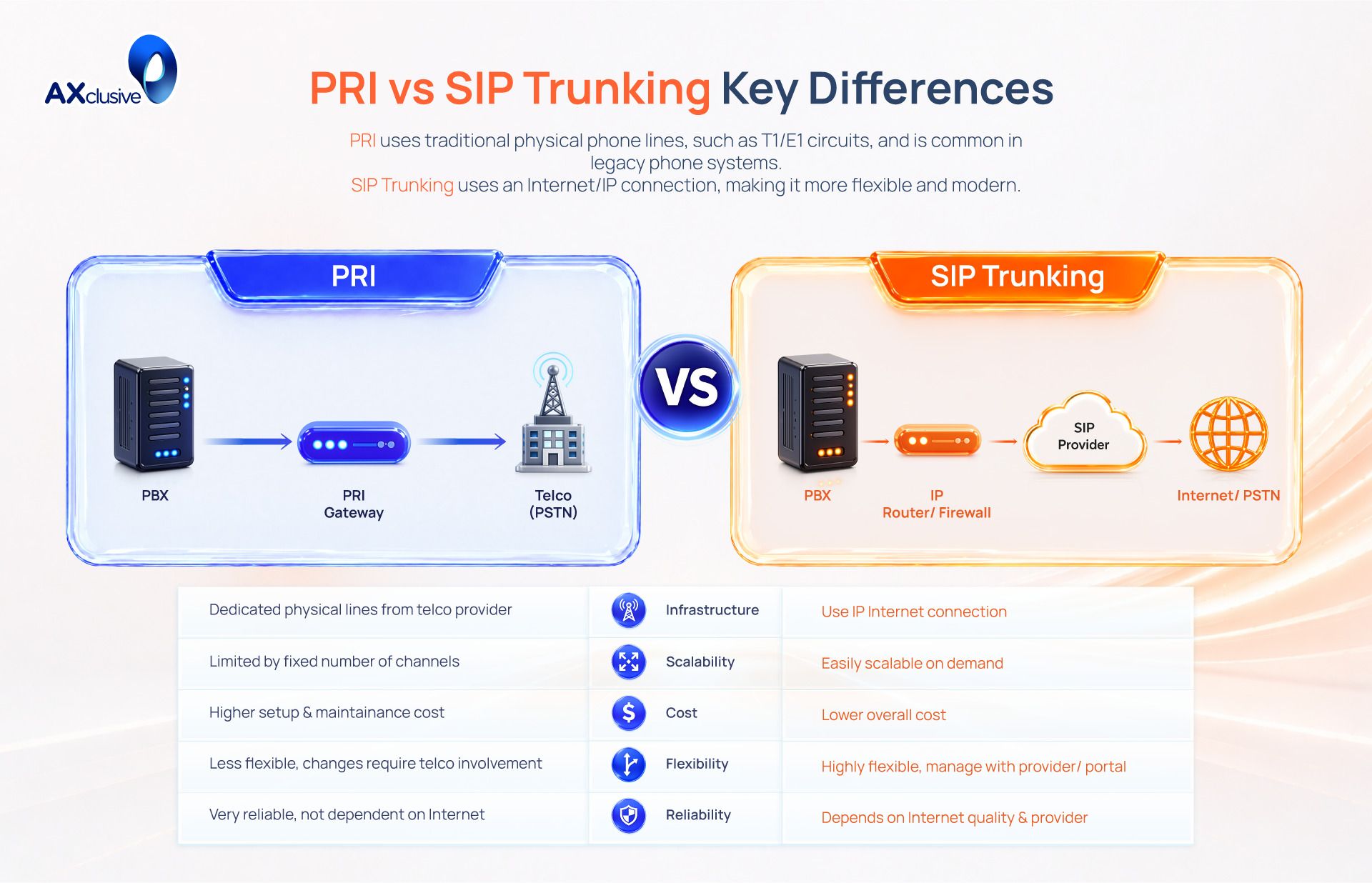
Historically, enterprise communications were built on circuit-switched technologies like the Public Switched Telephone Network (PSTN) and Integrated Services Digital Network (ISDN). These legacy systems required dedicated physical circuits, meaning voice and data traffic were completely separated.
Because the network was physically isolated, security was naturally built-in, and call quality remained predictable due to guaranteed bandwidth. However, this rigid architecture came with significant drawbacks, including high hardware costs, geographic limitations, and an inability to adapt to remote work or modern digital tools.
The Modern SBC-Enabled Voice Environment
Today modern communications operate on converged IP networks. Voice, video, and data now share the same packet-switched infrastructure. While this shift eliminates physical boundaries and significantly reduces costs, exposing real-time communication to the internet introduces severe security vulnerabilities.
This is where SBCs become critical. They bridge the gap between internal networks and the outside world, delivering the robust security, dynamic routing, and protocol translation required to make IP-based communications safe and reliable.
Benefits of Session Border Controllers
Deploying a Session Border Controller (SBC) provides a strategic advantage by transforming your voice network into a secure, efficient, and reliable communication platform. The benefits extend beyond simple call routing to deliver enhanced security, significant cost savings, and a superior user experience, ensuring your infrastructure is both compliant and future-proof.
Advanced Security: Blocks DDoS attacks, stops toll fraud, and encrypts calls (TLS/SRTP).
Cost Savings: Slashes telecom bills via Least-Cost Routing (LCR) and reduces hardware needs.
Maximum Flexibility: Bridges legacy PBX with cloud platforms (e.g., MS Teams) and secures remote workers.
Strict Compliance: Meets regulatory standards (HIPAA, GDPR) with native call logging and auditing.
Premium Quality: Prioritizes voice traffic (QoS) for clear audio and ensures 99.99% uptime via instant failover.
Session Border Controllers in the Singapore Context
Singapore’s position as Asia-Pacific’s telecommunications and financial hub creates unique requirements for enterprise communications:
Regulatory Environment
The Infocomm Media Development Authority (IMDA) mandates specific security and resilience standards for telecommunications services. SBCs deployed in Singapore must support lawful intercept capabilities, maintain comprehensive audit logs, and implement security controls aligned with Cybersecurity Act requirements.
Financial Services Sector
With over 150 financial institutions headquartered in Singapore, the banking and investment sector demands robust, compliant communications infrastructure. Monetary Authority of Singapore (MAS) Technology Risk Management Guidelines specifically address communications security, requirements that properly configured SBCs inherently satisfy.
Multi-National Operations
Singapore serves as regional headquarters for many multinational corporations, requiring communications infrastructure that supports diverse geographic operations. SBCs enable cost-effective international connectivity while maintaining centralized security policies and ensuring consistent user experiences across Asian, European, and American offices.
Smart Nation Initiatives
Singapore’s digital transformation agenda emphasizes secure, reliable digital infrastructure. Enterprise communications leveraging SBC technology align with Smart Nation objectives by enabling secure remote work, supporting digital service delivery, and providing the resilient infrastructure required for critical business operations.
In conclusion, the Session Border Controller is no longer an optional component but a foundational element of any modern enterprise voice network. It provides the essential security, interoperability, and quality of service management required to operate reliably in a converged IP environment. This guide from Axclusive delivers the insights needed to leverage SBCs effectively, ensuring your communications remain secure, compliant, and ready for the future.
Contact us today to learn how a Session Border Controller can secure and optimise your VoIP infrastructure for enterprise performance.