
What Is Hosted VoIP in Business Communication?
Business communication is shifting from physical wires to the cloud. Understanding what is hosted VoIP is the first step in modernizing your office. This technology allows you to manage phone calls over the internet using a provider's off-site servers. Join Axclusive as we explore the core features and practical benefits of hosted phone systems in the article below.
What Is Hosted VoIP?
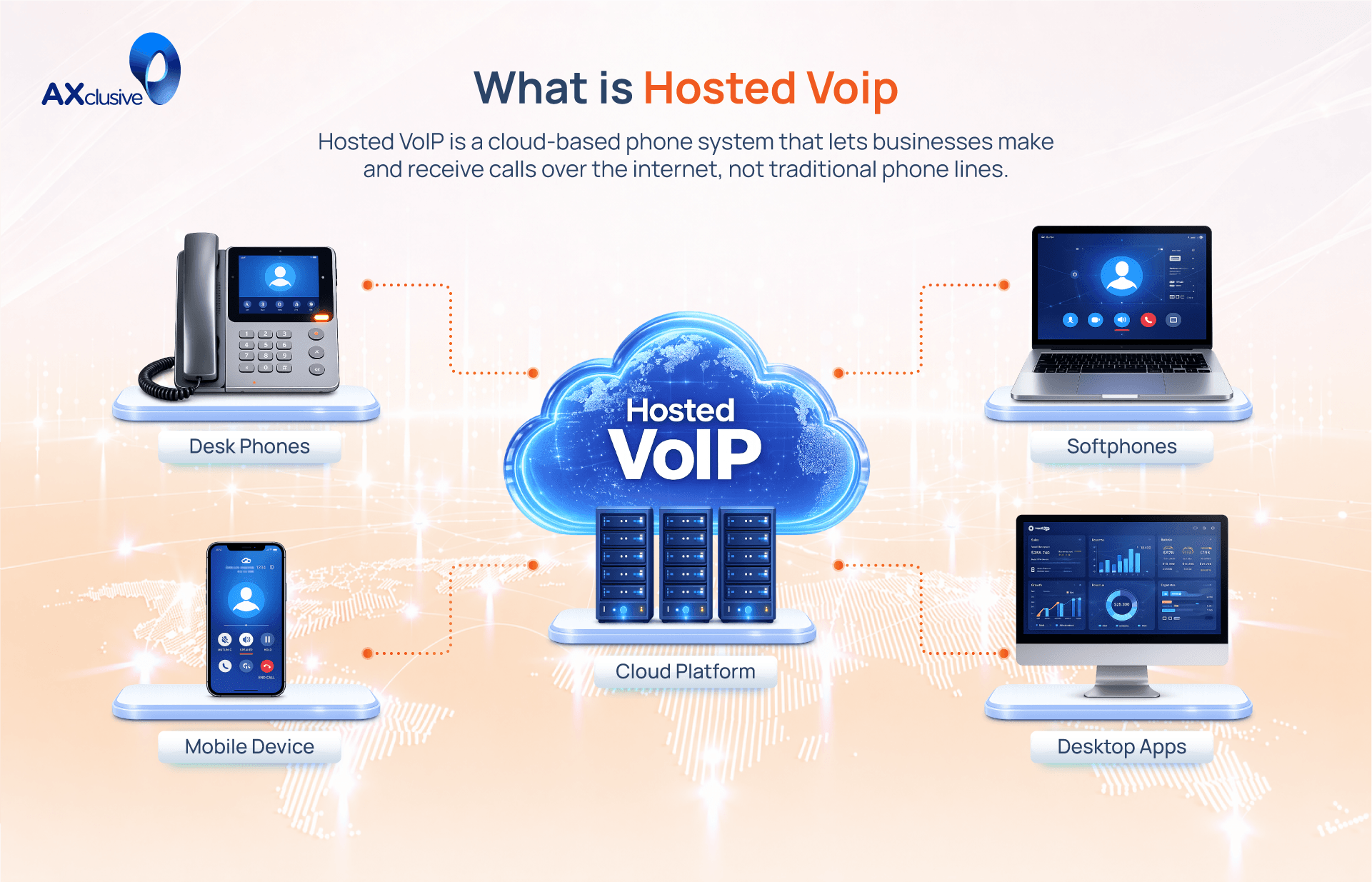
Hosted VoIP is a cloud-based telephony service that transmits voice and multimedia data over an internet connection rather than traditional copper wires. In this model, the service provider manages all necessary hardware and servers in a secure, off-site data center. This eliminates the requirement for businesses to purchase, house, or maintain physical Private Branch Exchange (PBX) equipment on their premises. Users interact with the platform through IP-enabled desk phones, desktop applications, or mobile apps, enabling professional communication from any location with internet access. By offloading infrastructure management to a third party, organizations gain a scalable, feature-rich phone system while significantly reducing upfront capital expenses.
Support your growing business with dedicated internet access that delivers dedicated bandwidth, stable connectivity, and dependable internet performance every day.
How Hosted VoIP Operates in Business Communication
Hosted VoIP replaces legacy physical wiring with digital data transmission. It utilizes your internet connection to route voice traffic through cloud-based servers managed by a third-party provider. This modern approach ensures communication remains flexible and independent of physical office locations.
The process of a hosted VoIP call follows four primary technical steps:
Digital Conversion: The system captures your analog voice through a microphone. It immediately encodes these sound waves into digital data packets.
Internet Transmission: Your local router sends these packets across the internet to the service provider's data center. The provider hosts the switching infrastructure off-site.
Intelligent Routing: The provider’s server acts as a virtual switchboard. It identifies the dialed number and determines the most efficient path to reach the destination, whether it is another VoIP phone or a traditional landline.
Signal Restoration: The receiving device collects the data packets. It reassembles them in the correct order and decodes the digital bits back into analog sound for the listener.
Core Features of Hosted VoIP
Hosted VoIP platforms integrate multiple communication tools into a single digital interface. These systems provide advanced capabilities that traditional landlines cannot support without expensive hardware additions. By moving telephony to the cloud, organizations gain access to a suite of productivity features that streamline business workflows.
Auto Attendant: This feature acts as a virtual receptionist. It provides a professional greeting and routes callers to specific departments or extensions through a customizable menu.
Mobile Softphone Applications: Employees can install applications on their smartphones or laptops. This allows them to manage business calls and voicemails from any location, supporting remote and hybrid work models.
CRM Integration: The phone system connects directly with Customer Relationship Management software. It logs every call automatically and displays caller data on the screen during incoming sessions to improve customer service.
HD Voice Quality: Utilizing wideband audio codecs, hosted systems deliver superior sound clarity. This technology minimizes background noise and ensures high-fidelity communication.
Voicemail-to-Email Transcription: The system converts voice messages into text. It then delivers the transcription and the audio file directly to the user's email inbox for faster review.
Detailed Call Analytics: Administrators can access real-time data on call volumes, average wait times, and missed call rates. These insights help businesses optimize staffing levels and improve operational efficiency.
Instant Scalability: Organizations can add or remove phone lines and extensions via a web-based portal. This allows the communication system to grow alongside the business without requiring physical installation.
Multi-Party Conferencing: Users can host audio or video meetings with numerous participants. This facilitates collaboration between dispersed teams without the need for third-party conferencing services.
Global Number Provisioning: Businesses can acquire local, international, or toll-free numbers instantly. This establishes a local presence in target markets regardless of the physical office location.
Want to optimize call quality and ensure stable business communication? Explore our guide on VoIP Bandwidth to learn how bandwidth affects VoIP performance, latency, and voice clarity.
Hosted VoIP Benefits for Modern Businesses
Modern businesses require agile communication systems to remain competitive. Transitioning from traditional landlines to a hosted VoIP model provides immediate operational advantages. This shift moves the technical burden from your office to a secure cloud environment. Organizations gain access to high-tier technology without the high-tier price tag. The primary benefits include significant cost reduction, improved mobility, and enterprise-grade features that enhance daily productivity.
Lower Communication Costs
Hosted VoIP significantly reduces the Total Cost of Ownership (TCO) for business telephony. Traditional systems require large upfront investments in servers, proprietary phones, and specialized wiring. VoIP eliminates these capital expenditures because the service provider owns the hardware. You pay a predictable monthly subscription fee per user. This model turns a massive upfront cost into a manageable operational expense. Furthermore, international and long-distance rates are typically lower on internet-based networks compared to traditional carriers.
Reduced Maintenance Demands
Managing a physical phone system consumes valuable IT resources. On-premises PBX units require regular hardware checks, manual software updates, and physical repairs. With a hosted solution, the provider handles all backend maintenance. They manage the server uptime, security patches, and software upgrades automatically. This allows your internal IT team to focus on strategic business projects rather than troubleshooting phone lines. You never have to worry about aging hardware becoming obsolete because the provider constantly improves the infrastructure.
Access to Advanced Calling Features
Small and medium businesses can access the same advanced tools used by global corporations. Features that were once expensive add-ons, such as call recording, auto-attendants, and voicemail transcription, are often standard in hosted VoIP packages. These tools allow you to automate call routing and improve internal workflows. You do not need to install additional hardware modules to get these capabilities. Everything is managed through a software dashboard, giving you total control over how your business communicates.
Flexible and Scalable Deployment
Scalability is a core strength of cloud-hosted technology. Adding a new employee to a traditional system might require a service visit to install a new line. In a hosted VoIP environment, you can add or remove users instantly through a web portal. This flexibility supports seasonal businesses or rapidly growing teams. Additionally, the system is location-independent. Employees can use their business numbers via mobile apps or desktop software while working remotely, ensuring seamless communication regardless of their physical location.
Better Customer Service Support
Hosted VoIP improves how customers interact with your brand. Features like Interactive Voice Response (IVR) and call queues ensure that callers reach the correct department quickly. You can set up "hunt groups" so that multiple phones ring simultaneously, reducing the chance of a missed call. Integrating your phone system with CRM software allows staff to see customer details before they even answer. This data-driven approach results in faster resolutions and a more professional customer experience.
Improved Security Controls
Service providers invest heavily in multi-layered security protocols to protect their infrastructure. Hosted VoIP platforms utilize end-to-end encryption and advanced firewalls to secure voice data packets as they travel the internet. Providers also monitor their networks 24/7 for unusual activity or potential fraud. This level of protection is often superior to what an individual business can implement on a local, unmanaged system. Regular security audits ensure that your communication remains private and compliant with industry standards.
FAQ
What is the difference between VoIP and hosted VoIP?
VoIP is the broad technology that enables voice transmission over the internet. Hosted VoIP is a specific service model where a provider manages the entire phone system infrastructure in the cloud. While standard VoIP can be managed on-site with local servers, hosted VoIP removes the need for physical hardware by shifting all management and maintenance to the service provider.
What Does Hosted VoIP Typically Cost?
Hosted VoIP services generally cost between $15 and $35 per user per month. Total expenses depend on your team size, required features, and hardware choices. Most businesses save money because the monthly fee includes maintenance, security updates, and long-distance calling, eliminating the need for a large upfront capital investment in server hardware.
What is the difference between hosted VoIP and SIP?
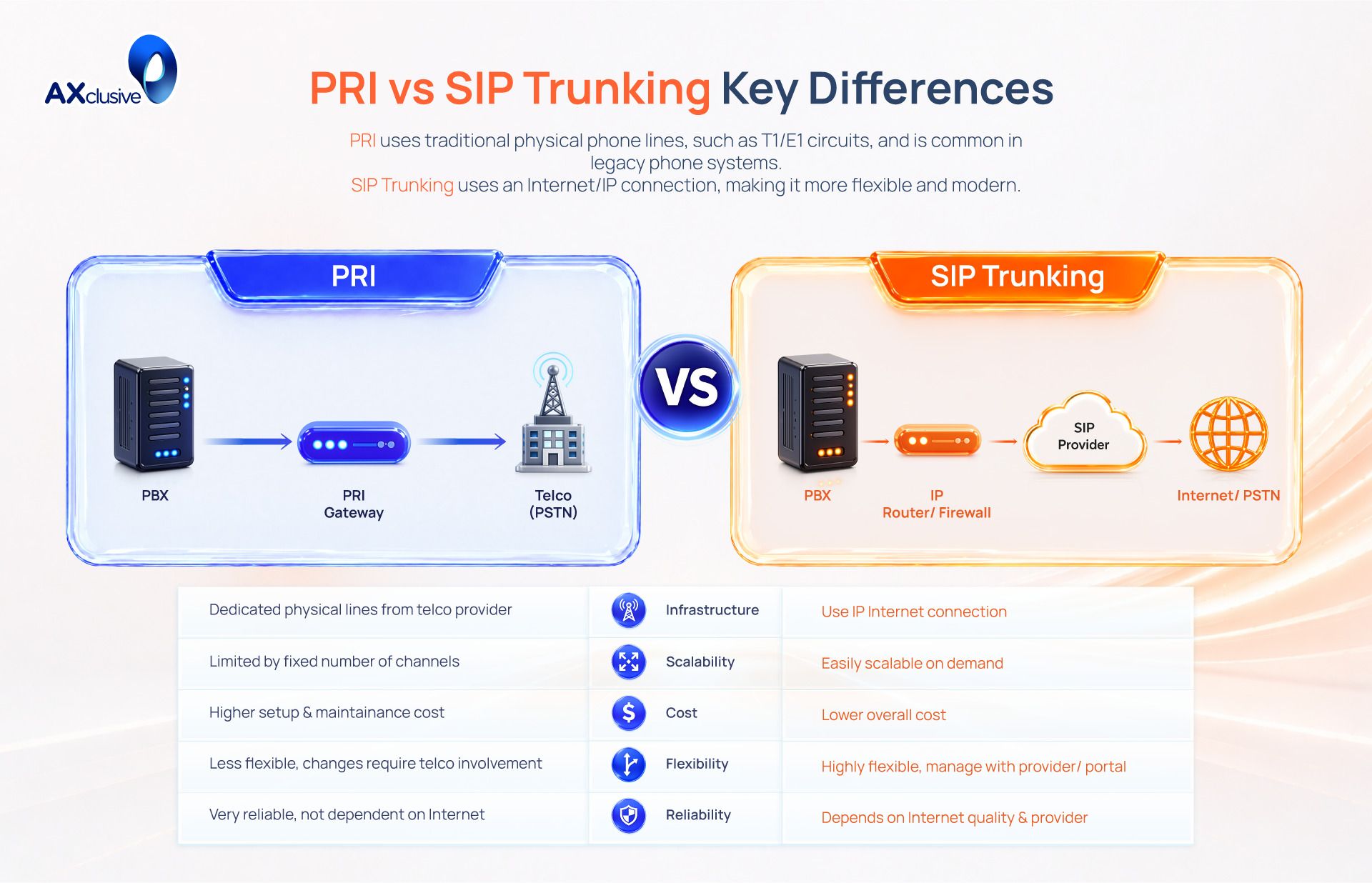
Hosted VoIP is a complete, ready-to-use cloud phone system managed by a provider. SIP (Session Initiation Protocol) is the specific technical language or protocol used to establish and manage those calls. While hosted VoIP is the finished product, SIP trunking is a method used to connect an existing, on-premise physical PBX to the internet.
Adopting hosted VoIP transforms your business communication into a scalable, cloud-driven asset. By eliminating on-premise hardware, you lower operational costs and reduce technical management burdens. This technology delivers the mobility and advanced features required to stay competitive in a digital-first economy. Axclusive provides the technical insights needed to ensure your transition to the cloud is secure and efficient. Use this guide to modernize your infrastructure and build a more resilient communication network.
Discover what is hosted VoIP and how it transforms your business communication with flexible, cloud-based calling solutions. Contact us today to upgrade your system and stay connected anywhere