
What is an Extranet? Benefits for business networks
Sharing sensitive data with outside partners creates significant security risks for any modern business. What is an extranet? It is a secure, private network designed specifically to solve this problem by giving controlled access to trusted vendors, suppliers, and clients. Join Axclusive below to explore how this digital bridge operates and why it is essential for secure B2B collaboration.
What is an extranet?
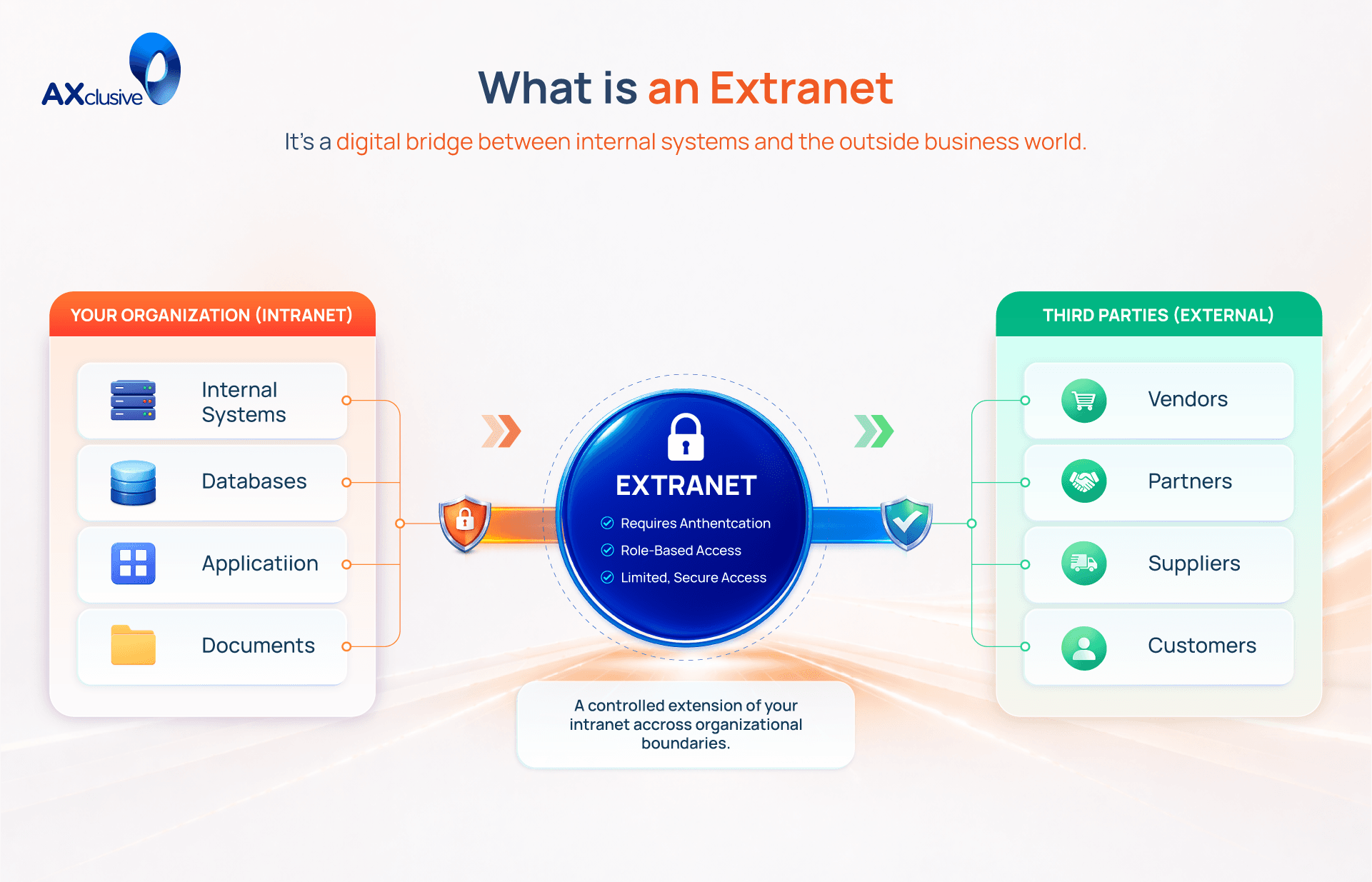
An extranet is a private network that allows an organization to share information or operations with specific third parties securely. These external stakeholders typically include vendors, partners, suppliers, or customers. Unlike the public internet, an extranet requires authentication and provides limited access based on user roles. It functions as a digital bridge between internal systems and the outside business world. This architecture enables companies to collaborate without exposing their entire internal network to the public.
Inter-company relationships depend on the efficient exchange of data. An extranet facilitates this by creating a collaborative environment where different organizations work on joint projects or manage supply chains. This network design improves transparency and reduces the delays associated with manual communication. By providing a centralized platform for resources, companies eliminate the risk of miscommunication and ensure all parties have current information. It is essentially a controlled extension of an intranet that reaches across the organizational boundary
Extranet vs Intranet Key Differences
The primary difference between an intranet and an extranet is user access. An intranet is a closed, private network built exclusively for your internal employees. Companies use it to host HR documents, build corporate culture, and streamline internal team communication. In contrast, an extranet extends a secure portion of that internal network to the outside world. It grants controlled, limited access to external stakeholders like vendors, suppliers, and clients for specific collaborative projects.
While an intranet serves broad organizational needs, an extranet focuses on narrow business-to-business objectives. Because an extranet connects external users to your internal resources, strict security is mandatory. A vulnerability in your extranet can quickly expose your private intranet data. Network administrators must isolate these environments properly. You must enforce Role-Based Access Control (RBAC) and Multi-Factor Authentication (MFA) to ensure that third parties only view the exact data they need to fulfill their contracts.
Why Extranet Matters for Business Operations
Modern business relies heavily on external partnerships. Relying solely on internal networks or disjointed public tools creates bottlenecks when collaborating with vendors, suppliers, or clients. An extranet provides a dedicated, secure bridge that synchronizes operations between your internal team and these essential third parties. This controlled environment significantly improves efficiency and protects sensitive corporate data.
Email Alone Is Not Enough
While email is the standard for formal communication, it completely fails as a collaborative workspace. Managing a joint project via email results in tangled threads, lost attachments, and version control nightmares. An extranet replaces this chaos by providing a centralized platform where external partners can view, edit, and discuss documents in real time, ensuring everyone works from a single source of truth.
Large Scale Data Exchange
Successful business-to-business (B2B) relationships often require the transfer of massive files or databases. Standard email or consumer-grade file-sharing links are inadequate and insecure for this task. Extranets utilize Electronic Data Interchange (EDI) capabilities, allowing partners to securely upload and download large volumes of data directly through a dedicated portal. This accelerates project timelines and reduces the resources wasted on manual data transfer methods.
Controlled Access to Shared Information
Information overload reduces productivity. Extranets solve this by allowing organizations to share specific data exclusively with targeted stakeholders. Through role-based permissions, a supplier only sees inventory levels relevant to their contract, while a client only sees their specific billing history. This targeted sharing keeps private data secure and ensures external users are not distracted by irrelevant corporate information.
Support for Project Coordination
Large-scale initiatives, particularly in sectors like manufacturing or construction, require seamless coordination across multiple organizations. An extranet serves as the central hub for project management. It provides the robust tools necessary for different companies to track milestones, share blueprints, and communicate efficiently. Without this unified platform, decision-making slows down and relies on fragmented or outdated information.
Stronger Privacy and Access Control
Managing sensitive data across multiple third-party tools creates a massive security risk. An extranet allows an organization to build a single, well-rounded, and highly secure network environment. Companies maintain total control over user authentication, data encryption, and access logs. For businesses that manage multiple clients or distinct vendor networks, an extranet provides the architecture needed to keep each party’s affairs strictly separated and secure.
Common Extranet Types
Extranets are not a one-size-fits-all solution. Businesses design these networks to serve specific audiences and operational goals. The architecture and features of an extranet change depending on whether it connects suppliers, financial partners, or end-users. Below are the most prevalent types of extranets used in modern business.
Project Collaboration Portals
When multiple organizations collaborate on a single initiative, a project extranet serves as the central workspace. This portal allows all parties to track progress, update task statuses, and share confidential documents securely. It eliminates the need for scattered email threads and ensures everyone, regardless of their parent company, works from the same set of project data.
Logistics and Supply Chain Portals
Manufacturers and distributors rely heavily on logistics extranets to keep physical goods moving. These portals connect different third-party vendors across the entire supply chain. By providing real-time updates on inventory levels, shipping statuses, and production schedules, these extranets reduce delays, prevent stockouts, and streamline the logistical pathways between separate companies.
Centralized Information Portals
An information hub extranet is designed to disseminate critical updates to a large, distributed group of stakeholders. These portals ensure that external partners, such as franchisees or independent contractors, receive timely and relevant corporate information. They also function as a two-way channel, allowing these external groups to submit feedback or compliance reports back to the central organization.
Financial Access Portals
Financial extranets are heavily fortified networks built specifically for processing, transmitting, and storing sensitive accounting data. Banks, accounting firms, and investment groups use these portals to interact securely with their corporate clients. These platforms provide a safe middle ground where financial experts and clients can exchange transaction details and tax documents without risking data interception.
Customer Access Platforms
Customer-facing extranets act as self-service hubs. These platforms give clients direct access to their account information, order histories, and automated support tools. By providing an intuitive interface for customers to resolve their own issues or track their purchases, businesses grant users more autonomy. This significantly improves the overall buying experience and reduces the load on internal customer service teams.
Benefits of Using an Extranet
Implementing an extranet provides organizations with a distinct competitive advantage. By creating a secure, digital workspace for external partners, businesses eliminate the friction that typically slows down B2B operations. The direct benefits include improved workflows, reduced expenses, and a stronger foundation for professional relationships.
Better Collaboration Across Teams
An extranet transforms how your internal staff works with outside contractors and vendors. Instead of relying on fragmented email attachments, teams utilize a single, secure environment filled with the necessary resources to complete joint projects. This portal allows members from different organizations to share documents, read corporate news, and locate key contact information instantly, driving project success.
Faster Communication with Business Partners
Playing phone tag or waiting days for an email reply from a vendor halts time-sensitive operations. An extranet solves this by providing a consolidated communication space. All stakeholders know exactly where to log in to find the information or the person they need. This direct access eliminates the delays of traditional outreach, accelerating decision-making and problem resolution.
Lower Operating Costs
An extranet actively reduces business expenses by driving operational efficiency. For instance, granting a supplier direct access to your real-time inventory levels prevents order delays and eliminates the need for expensive, expedited shipping. By streamlining these back-end processes and reducing the necessity for constant in-person meetings, organizations protect their profit margins and maintain steady inventory for their customers.
Fewer Communication Gaps
Misunderstandings between trading partners usually stem from a lack of visibility. An extranet provides authorized external users with a controlled, "behind-the-scenes" look at your relevant workflows. While you maintain strict control over the data they can see, this transparency gives partners a clear understanding of your processes. This shared context significantly reduces confusion and operational friction.
Extranet FAQs
Who can access an extranet?
An extranet is accessed by authorized external users, such as vendors, suppliers, partners, and clients. Unlike a public website, access requires specific login credentials and is strictly controlled by the host organization using role-based permissions.
Is VPN an extranet?
No, a VPN (Virtual Private Network) is not an extranet itself. A VPN is the secure, encrypted tunnel technology used to connect remote users safely to an extranet or intranet over the public internet.
Is extranet a private network?
Yes, an extranet is a private network. While it uses the public internet as a transport layer to connect geographically dispersed users, the network is secured by firewalls, encryption, and strict authentication to ensure the data remains private and isolated from unauthorized public access.
Is extranet LAN or WAN?
An extranet is typically classified as a WAN (Wide Area Network). Because it connects a company's internal network (LAN) to the separate networks of external partners or remote users across different geographic locations via the internet, it functions as a wide-area architecture.
An extranet is essential for secure and efficient B2B collaboration. It seamlessly connects your internal operations with external partners while keeping sensitive corporate data fully protected. Axclusive provides this guide to equip your business with the knowledge needed to build a scalable, controlled network environment. Implement the right access policies today to streamline workflows, reduce operational friction, and foster stronger professional relationships.
Learn what is an extranet and how it can enhance secure business collaboration. Contact us to build a reliable network solution for your organization.